What Rush Was Always Mapping — And What Anika Nilles Already Means
On participation, loss, and why June 7th is already a success
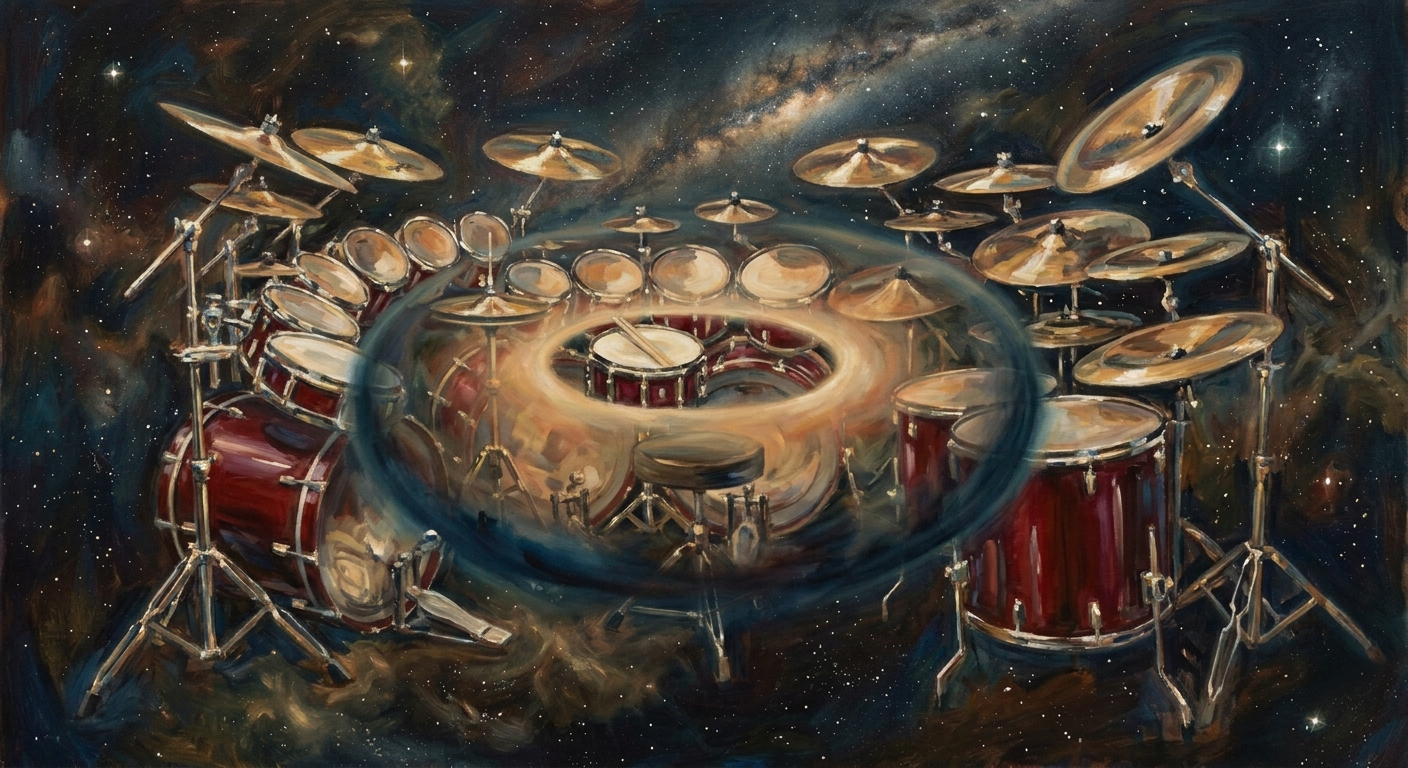
Neil Peart died on January 7, 2020. For anyone who grew up with Rush that sentence still lands with a particular weight. Not just the loss of a drummer — though he was one of the greatest who ever played. The loss of a philosophical voice that had been mapping something precise and serious about human experience for nearly five decades.
The question that followed was inevitable. Is Rush over?
Geddy Lee and Alex Lifeson have now answered it. The Fifty Something Tour begins June 7, 2026 at the Kia Forum in Los Angeles — already sold out. Anika Nilles joins them on drums. And Lee and Lifeson have made clear that playing with Anika feels like a genuine fit — not a compromise, not a tribute act, but a new course for the band they built together over five decades.
This essay is about why that answer makes complete sense. And why June 7th is already a success before a single note is played.
What Rush Was Actually Doing
For listeners who came to Rush through the drumming or the musicianship the philosophical content of the lyrics could feel secondary. The precision of Peart's playing, the elasticity of Lee's bass, the architecture of Lifeson's guitar — these were complete arguments in themselves. You didn't need the words to feel that something serious was being attempted.
But the words were serious. Across albums spanning five decades Rush mapped territory most rock bands never approached. The relationship between the individual and the collective. The nature of time and consciousness. The tension between rational clarity and felt experience. The cost of conformity and the weight of genuine freedom.
Peart brought the intellectual framework but he was always clear that Rush was three people. The music was never his philosophy illustrated — it was what happened when three distinct participants brought themselves fully into contact with each other and with the audience. The philosophy lived in the field between them not in any single voice.
What Rush Actually Was
When we ask whether Rush can continue without Neil Peart we are asking the wrong question. We are locating Rush's identity in one participant rather than in the participatory event that all three created together. That's a natural instinct — Peart was the most visible intellectual presence and his absence is real and irreversible. But it misunderstands what Rush actually was.
A participatory field is not the sum of its individual parts. It is what emerges when distinct participants bring themselves fully into genuine contact. What made Rush wasn't Peart's philosophy or Lee's voice or Lifeson's guitar in isolation. It was the specific quality of presence all three brought to the event of making music together — and what that event produced in the people who experienced it.
Fields don't end when one participant leaves. They transform. The question isn't whether Rush can be what it was. It's what Rush becomes when the field reconfigures around a new participant who brings herself fully into it.
What Anika Nilles Already Means
Anika Nilles didn't step into Neil Peart's seat. She stepped into a field that needed a new participant and brought herself completely into it. That's a different thing entirely.
She arrives with her own fully formed musical identity — a serious drummer and composer with a substantial body of work already behind her. Not a replacement. A new participant. The field that results is already different from what existed before and different from what either party brought into it separately.
Geddy Lee and Alex Lifeson have already named what that reconfiguration feels like from the inside. The word is joy.
That's not a small thing. Joy is not the word you use for a compromise or an obligation. It's the word you use when a participatory field is genuinely alive.
And then there is this: Carrie Nuttall-Peart and Olivia Peart — Neil's widow and daughter — have publicly voiced their support for the tour. That is the clearest possible signal that what is happening on June 7th carries Neil's presence forward rather than leaving it behind.
June 7th
The Fifty Something Tour will hold both simultaneously. Each night features two full sets drawn from a deep catalog. A tribute to Neil — because Rush would never do otherwise — and a continuation that demonstrates what the field has become.
That structure is philosophically precise even if nobody planned it that way. The past is carried honestly. The present is inhabited fully. The future is genuinely open.
For fans still uncertain about showing up — the uncertainty is understandable. Grief doesn't resolve on a schedule. But what Lee and Lifeson are reporting from inside the field, what Anika Nilles's presence already represents, and what Neil's own family has chosen to support, all point in the same direction.
June 7th is not an ending dressed as a beginning. It is what a participatory field looks like when it chooses to keep going.
That choice was already made before the first note. The success is already real.
A Map for This Moment
Participatory Realism — the framework at the center of The Field and the Heart — offers precise language for what Rush has always been doing and for what is happening now.
Not to resolve the grief. Not to tell you how to feel about June 7th. Just to name what's actually happening when a field transforms — and why transformation is not the same as loss.
The field is real. The participation is real. What happens on June 7th is yours.