Why Does Presence Feel Different From Thinking About Presence?
It's a simple question. The answer turns out to change everything.
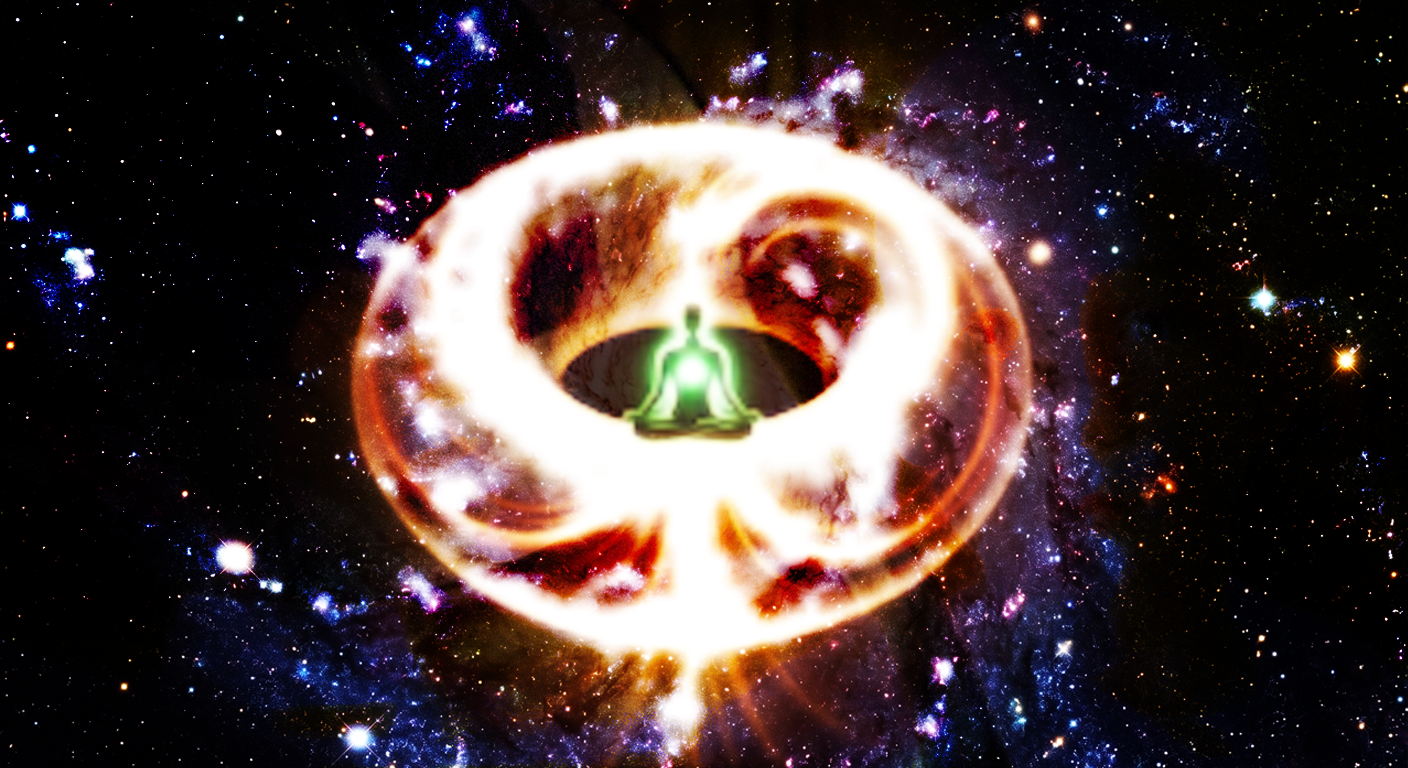
You already know what this essay is about. Not because you've read the book. Because you've had the experience.
There is a quality of being fully in a moment — not observing it, not narrating it, not storing it for later — that feels fundamentally different from thinking about that moment, or thinking about how you should be feeling in it, or noticing that you're not as present as you'd like to be.
The gap between those two states is not subtle. It's not a matter of degree. It feels like a different mode of existing entirely.
And almost nobody asks why.
We accept that presence feels different. We try to get more of it. We buy books and attend retreats and download apps designed to help us find our way back to it. But we rarely stop and ask the prior question: what is actually happening differently when you are present versus when you are merely thinking about being present? What changes, mechanically, structurally, in the fabric of your experience?
That question has an answer. It's not a mystical answer. It's a precise one. And arriving at it changes not just how you think about presence — it changes how you understand the relationship between you and everything you experience.
The Standard Explanation Doesn't Actually Explain It
The most common answer goes something like this: when you're present, your thinking mind quiets down and you drop into a more direct experience of what's happening.
That's not wrong. But it's circular. It describes the state using the state. It's like answering "why does swimming feel different from watching swimming?" with "because when you're swimming you're in the water." True. Unhelpful.
What it doesn't explain is why being in direct experience feels qualitatively different from observing experience from the inside of your own narration. Why the colors seem more vivid. Why the sense of separation between you and what you're experiencing becomes porous. Why time moves differently. Why, in those moments, something that is usually background — a quality of aliveness, of mattering, of genuine contact with what is real — steps forward.
Something is happening in those moments that isn't happening when you're in narration mode. Something structural. The framework calls it participation — and unpacking that word carefully is where the interesting territory begins.
You Are Not Separate From What You're Experiencing
Here is the thing most of us were never explicitly told, but that serious inquiry from multiple directions keeps arriving at:
You are not a spectator of reality. You are a participant in it.
This is not a motivational statement. It is a description of how reality actually works at its most fundamental level — confirmed by quantum physics, articulated by the Buddha twenty-five centuries ago, and available to direct experience in any moment of genuine presence.
The standard picture — reality out there, me in here, observing — turns out to be a useful simplification that breaks down under scrutiny. What physics discovered at the quantum scale is that the act of observation doesn't merely reveal what's already there. It participates in constituting it. The observer is not cleanly separate from the observed.
What contemplative traditions discovered through direct investigation of experience is the same thing expressed differently: nothing arises independently. Everything — including your experience of this moment, including the sense of a self having that experience — arises in relationship, in mutual dependence, in the ongoing participatory event of existing.
Neither the physicist nor the meditator is making a mystical claim. They are both reporting what they found when they looked carefully enough.
And here is the connection to your question about presence:
When you are thinking about your experience — narrating it, evaluating it, storing it — you are treating yourself as the spectator. The implicit structure of that mode is: reality is happening, and I am watching it and commenting. There is a subject here and an object there, and the subject's job is to accurately report on the object.
When you are fully in your experience — present, unnarrated, directly inhabiting the moment — the spectator position has dissolved. Not because you've stopped existing, but because the artificial separation between the one experiencing and the thing being experienced has become transparent. You are not watching the moment. You are in it. Which is, it turns out, what you actually are — always, at every moment. Presence doesn't create participation. It reveals that participation was already the structure of reality all along.
The narrating mind creates the illusion of separation. Presence drops the illusion and shows you what was always true.
Why It Feels Like a Different Mode of Existing
This is why presence doesn't feel like a more intense version of ordinary experience. It feels like a different kind of experience. Because it is.
In narration mode you are running a model of reality inside your head and relating to the model. The model is useful — it lets you plan, remember, anticipate, communicate. But it is always a step removed from the territory. You are, in a precise sense, experiencing your representation of the moment rather than the moment itself.
In presence, the model steps back and you make direct contact. Not with some mystical unmediated reality — the senses still operate, the mind still functions — but with the ongoing participatory event of this moment, which is richer and more alive than any model of it can capture.
The vividness, the porousness, the sense of genuine contact — these are not psychological effects of relaxation. They are what direct participation feels like compared to mediated representation. They are the signature of the real thing.
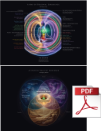
And what the framework offers — what the book develops carefully and precisely — is a map of why this is true at every scale of reality simultaneously. Not just at the personal scale of your experience. At the scale of physics. At the scale of the cosmos. The same structure all the way down and all the way up.
That map doesn't tell you how to be more present. There are plenty of books for that. What it does is something harder to find: it tells you what presence is — structurally, precisely, without mystification — and why it feels the way it does.
Which turns out to be exactly what the Exhausted Seeker, and the curious physicist, and the person who just wants to understand their own experience a little more honestly, has been looking for.
The Field and the Heart: A Unified Map of Reality and Personal Experience by Kurt Schramer explores these questions in full.